
All About Diwali
By Krishti Baria
Diwali, the festival of lights, is a widely celebrated holiday among Hindu families. Diwali, which is also known as Deepavali, consists of 5 different days which represent different virtues of Diwali. Every family has their own traditions, such as doing Puja together as a family, setting off fireworks, and having a Diwali party all together. A student at Nease, Rhea Patel, gave us a little onlook on her family traditions saying, “My family uses Diwali as a free excuse to get together as our entire family is always invited for a pooja in the morning and then food after. It’s always been important to me as it’s a fun day where I get to see my cousins and celebrate our culture.” Rhea Patel shows the importance of Diwali as families from all over get together to spend time together and show their traditions and culture.
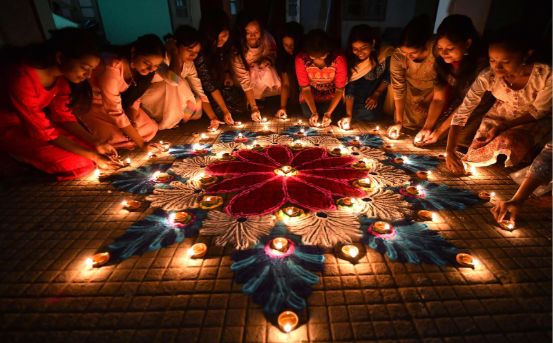
Every family has their own traditions and stories. To start off Diwali, we go back thousands of years. One story says that Diwali started when King Rama and his wife Sita came back from 14 years of exile to the Kingdom of Ayodhya. Whilst in exile, the demon King Ravana kidnapped Sita. Once Rama learned of this, Rama went to Hanuman to help bring Sita back. Eventually, Hanuman’s army and Rama defeated Ravana, ultimately saving Sita. Once Sita was rescued, both Her and Rama returned back to the Kingdom. The people of Ayodhya celebrated by lighting diyas (little clay lamps) to help guide their way back. People also cleaned their homes and created colorful rangoli to celebrate their return. That’s why for Diwali, there are 5 days, as they signify the 5 days of celebration after and during their return.
Day 1: Dhanteras
Dhanteras is the day of wealth and prosperity. Dhanteras falls on the 13th day of the Hindu month Karthik, which follows the Hindu lunar calendar. On Dhanteras, people thoroughly clean their homes and start placing diyas and decorating the front of their homes with flowers or rangoli. People do this as it is believed that the Goddess of Wealth, Lakshmi, will be invited and will bless the household. The main part of Dhanteras is buying a token. The token can range from new gold and jewelry to something as simple as new utensils. It is said that anything new invites good luck and increases wealth.
Day 2: Naraka Chaturdashi or Choti Diwali
This is the 14th day of the Karthik month and symbolizes the triumph of good over evil. On this day, it is said that Lord Krishna defeated the demon King Naratasura, and freed 16,000 captives bringing peace and light. To celebrate people, take an oil bath which purifies the body and soul. It is usually taken with scented oils to wash away the sins, negativity, and bad luck. Again, houses are lit with diyas in the evening.
Day 3: Lakshmi Puja (Main Diwali Day)
Lakshmi Puja is the most important day of Diwali as the festival is celebrated. The entire day is dedicated to the Goddess of Lakshmi. It is said that during the festival, Lakshmi visits home and blesses them. On this day, families clean their homes, decorate with lights, diyas, and flowers, along with creating intricate rangoli as it all welcomes Lakshmi. People also give offerings to Lakshmi such as sweets, fruits, and flowers along with prayers for wealth, health, and happiness. At the end of the Puja, prasad or food offerings are given to family and friends. After Puja, people light up diyas and burst firecrackers and fireworks to celebrate. The fireworks represent the joy and happiness along with the victory of light over darkness. Family members exchange gifts and sweets as it is an important part of Diwali to be generous.
Day 4: Govardhan Puja (Day of Gratitude)
This day marks an important part of Lord Krishna’s life. On this day, Krishna lifted the Govardhan hill to protect a village from a destructive storm sent by the God of Rain, Indra. The hill lifting represents the power of humility and devotion. On this day, people prepare large vegetarian dishes which are used as offerings. This offering is called Annakut or “mountain of food”. Lord Krishna is bathed in milk, dressed in new clothes, and a feast is prepared. This day also symbolizes love and respect between husband and wife. Usually, husbands give gifts to their wives as a token of their love and appreciation.
Day 5: Bhai Dooj (Brother and Sister Bond)
The final day of Diwali is Bhai Dooj or Bhaiya Dooj or Bhau Beej (depending on region). This day celebrates the special bond between a brother and a sister. In the legend, the God of Death, Yamraj, visited his sister. She welcomed him with a tilak (mark on the forehead made with red powder and water) and performed an aarti and offered sweets. In return, Yamraj promised a long, healthy life. On Bhai Dooj, sisters perform a small ceremony where they apply tilak and pray for a long life for their brother.
All 5 days of Diwali, mixed with every family’s unique tradition and culture of many Hindus, Jains and Sikhs around the world, is what makes Diwali an incredibly special festival. Diwali is a time for new beginnings and bringing families and friends along with others in the community all together to spend time.
Source(s):
Britannica. (2018). Diwali | definition & facts. In Encyclopædia Britannica. https://www.britannica.com/topic/Diwali-Hindu-festival
Diwali – national museum of Asian art. (2023, October 24). National Museum of Asian Art. https://asia.si.edu/whats-on/events/celebrations/diwali/
Mckeever, A. (2020, November 12). The history and customs of Diwali, the Indian festival of lights. National Geographic. https://www.nationalgeographic.com/history/article/diwali-history-customs-indian-festival-of-lights
